The most common mistake in cabinet specification is treating the coating as the last decision. It should be one of the first.
Coatings get pushed to the end of the process in almost every project I see. The cabinet is designed, the materials are chosen, the hardware is specified, and then somewhere near the back of the brief, someone writes "finish TBC." By the time that line gets revisited, the rest of the cabinet has already been built around assumptions that the finish has to accommodate. It is a bad order of operations, and it costs people.
The finish is not decoration. It is an engineering layer that affects acoustic damping, moisture resistance, impact durability, and long-term appearance. All four of those matter, and each of them points in a different direction depending on what the cabinet is for.
Touring cabinets and installation cabinets are not the same job
A touring cabinet lives a hard life. It goes into a flight case, comes out, gets rigged, gets de-rigged, goes back into the case, back into a truck, across a border, into another venue, and repeat that cycle two hundred times a year. The finish on a touring cabinet has to survive physical abuse. It has to shrug off corner knocks, forklift rubs, strap burns, and the thousand small indignities of life on the road.
For that job, we use textured polyurea and polyurethane systems. These finishes are thick, elastic, and tough. They build up a resilient surface that does not crack when the cabinet takes a hit. They hide minor scuffs rather than advertising them. When they do eventually wear, they can usually be patched on site without the cabinet coming off the rig.
An installation cabinet is a completely different engineering problem. It goes into a venue, a theatre, a corporate space, a hotel ballroom, and it stays there for a decade. Nobody throws it in a flight case. Nobody wheels it across a loading bay. What it does have to do is look right. The finish has to be beautiful on day one and still beautiful in year ten.
For that job, we use high-gloss lacquer systems. These are thin, hard, precise finishes that produce the kind of surface you want to look at in a showroom. They are not designed to take impact. They are designed to deliver a perfect optical result under architectural lighting, year after year.
Client-specified finishes and branded colour matching
A third category sits alongside those two. Some clients have a house finish. A specific colour, a specific texture, a specific sheen level, specified by Pantone and enforced across every cabinet that leaves with their name on it. For those clients, we match the finish exactly. If a brand has built its identity around a particular charcoal or a particular ivory, that colour has to be right on every panel, every time.
Colour matching across batches is harder than it sounds. Pigment lots vary. Substrate colour affects the appearance of the top coat. Humidity affects flow. Every one of those variables has to be controlled, or the client ends up with a row of cabinets that do not match each other, which is arguably worse than no coating at all.
What actually goes into a proper coating system
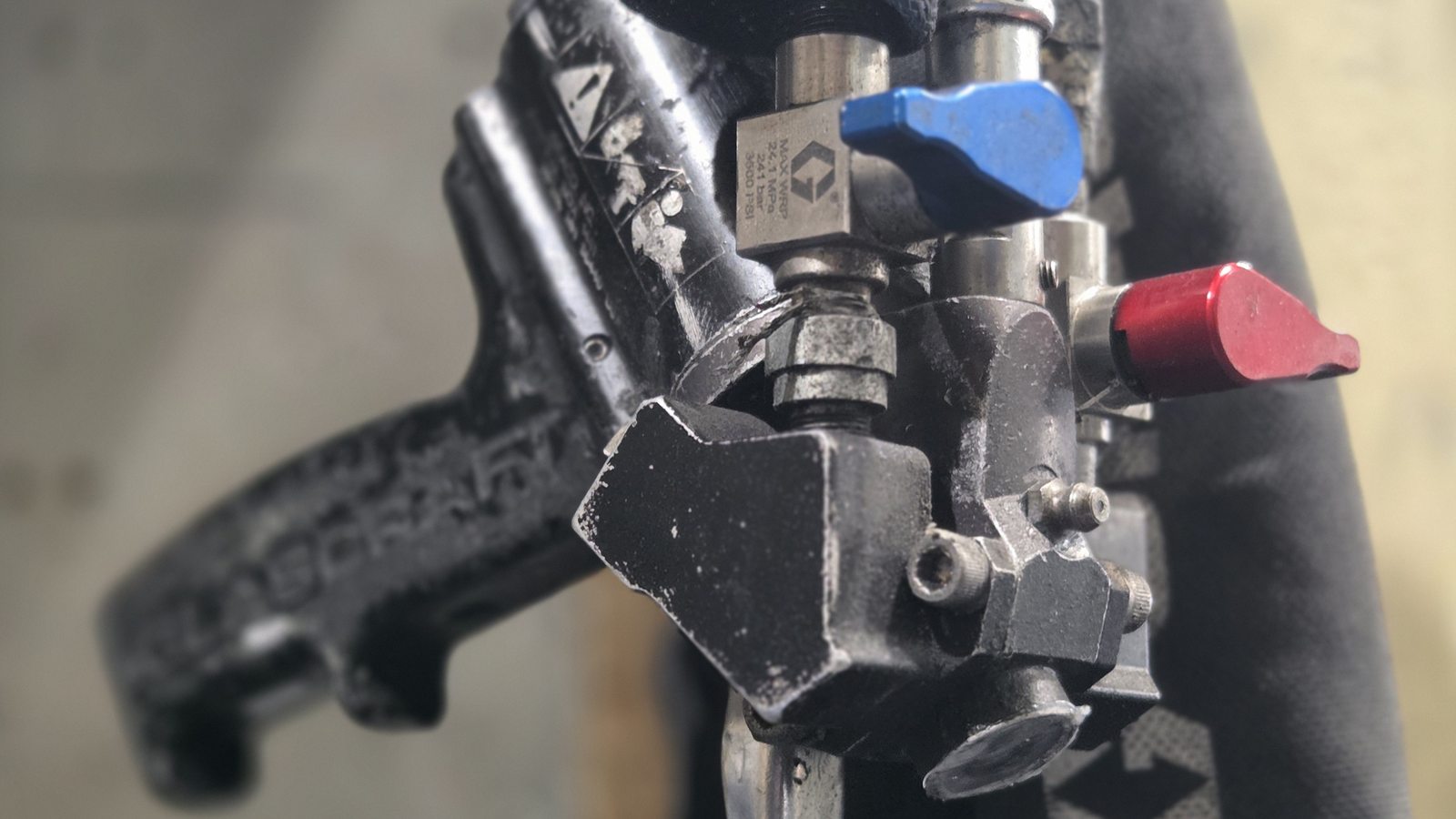
People see the spray shop and think it is one step. It is not. A proper coating system involves surface preparation, primer application, sanding, intermediate coats, more sanding, topcoat application, and a controlled cure. On a gloss finish, you might have six or seven stages before the cabinet comes out of the booth. Each stage has to be done in the right order, with the right products that are compatible with the ones before and after.
Compatibility is one of the biggest traps. If you put a topcoat on a primer it does not like, you get fisheyes, you get lifting, you get delamination weeks later. None of that shows up on the day. It shows up when the cabinet has been in the field for six months and suddenly the finish starts peeling at the edges.
The spray environment also matters more than people realise. Temperature, humidity, and air flow all affect how the coating lays down and cures. A spray booth that is not properly conditioned will produce inconsistent results, and inconsistent is the last thing you want when the client is expecting a matched set.
If the coating conversation happens at the end of the specification process, it is already too late. The best cabinets are specified from the outside in.
Why this matters at the specification stage
Because the finish drives decisions upstream. A high-gloss cabinet needs the surface underneath it to be close to flawless, which means the joinery and sanding are held to a tighter standard than they would be for a textured finish. A textured coating is more forgiving of minor surface variation, but it adds weight and thickness that the hardware cut-outs have to accommodate. A client colour match needs to be tested on sample panels before the production run starts, which takes time that nobody has budgeted for if the finish decision comes late.
All of these are trivial to plan for if you know the answer at the start of the project. All of them become expensive if you do not find out until the cabinet is sitting in the spray shop.
The best cabinets are specified from the outside in. Decide what the finished surface has to look like and survive, and let that drive the choices underneath it. The worst cabinets are specified from the inside out and then asked to accept whatever finish happens to be available at the end.
If you are planning a new cabinet programme, have the coating conversation first. It will save you money, time, and the kind of problem that only shows up when the product is already in the field.