
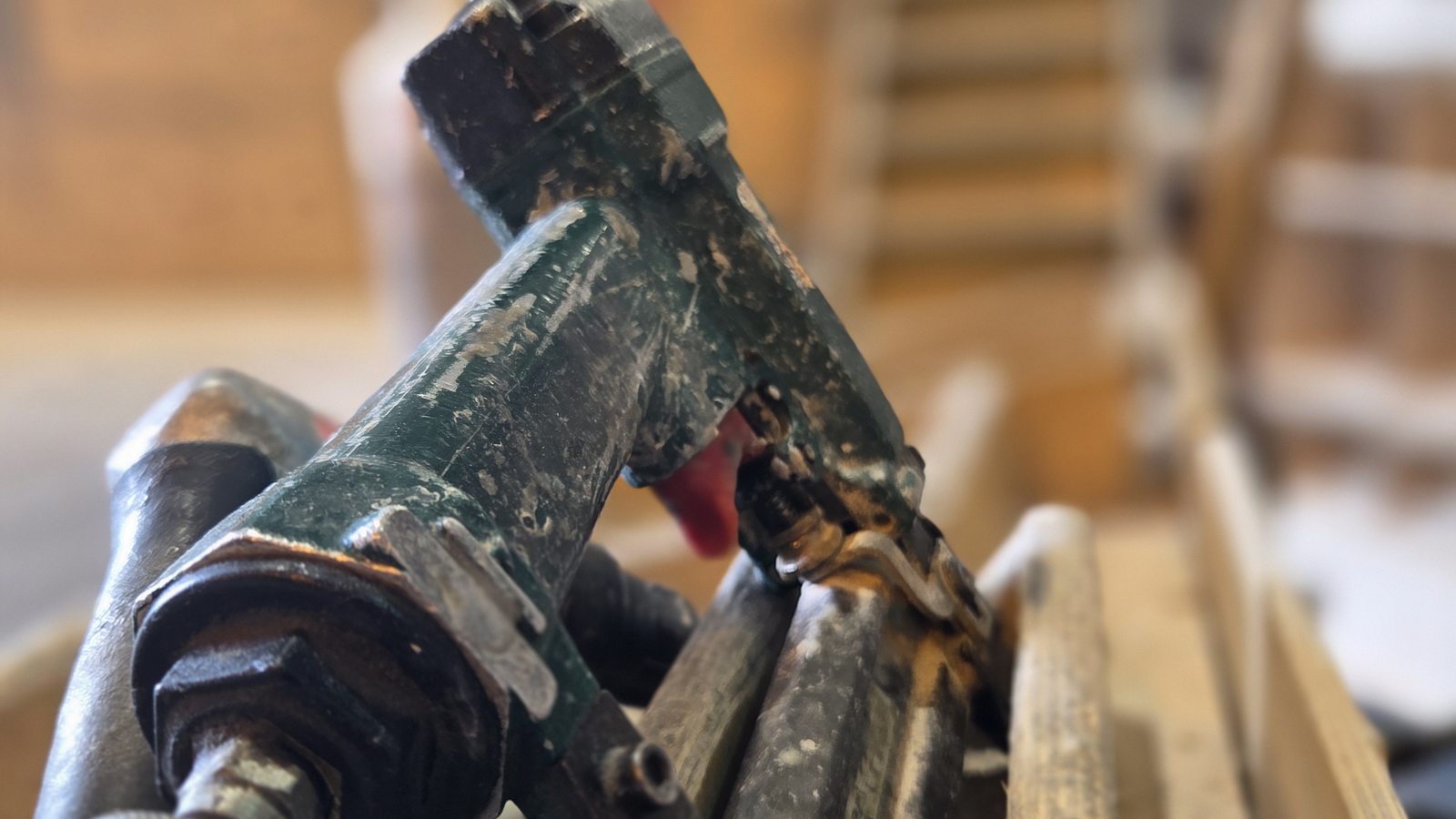
People assume that because we use CNC machines for cutting, the whole process is automated. It is not. Assembly is done by hand, deliberately.
It is one of the first questions I get asked when somebody visits the workshop for the first time. They see the CNC cells, they see the panels coming off the bed cut to shape, and they assume the rest of the process is robots and conveyor belts. It is not. Once the panels leave the cutter, they go to an assembly bench, and a person picks them up.
That is a deliberate choice. It is not nostalgia and it is not cost saving. It is the only way we know to build cabinets that behave the way they are supposed to behave.
What actually happens at the assembly bench
When a set of panels arrives at assembly, the work that begins is full of judgement calls. How hard to clamp a joint without crushing the timber. Whether a brace is seating flush or needs a slight adjustment before the adhesive goes down. Whether the glue is spreading evenly or beading up because the shop air is a degree too dry. Whether a joint has pulled true or whether it needs another moment with the clamps before the cure takes hold.
None of that is on the drawing. None of it can be measured by a machine in advance. It is a conversation between the assembler and the cabinet, and it only ends when the assembler is satisfied that the piece is going together the way it should.
Some of those decisions are so small they would be invisible to somebody walking past. A slight shift in clamp pressure. An extra half-minute of waiting before the next step. A quick realignment when a brace has crept a fraction out of position while the adhesive flashed off. Tiny things. Every one of them matters. Every one of them is the difference between a cabinet that sings in the field and one that rattles in six months.
Why experience matters more than instructions
Our assembly team averages around twelve years of service in this workshop. Some of them have been building cabinets here for considerably longer. That is not a statistic we show off for the sake of it. It is a working tool. An assembler who has built thousands of cabinets has a feel for what is right and what is wrong that you cannot teach in a week, a month, or a year.
It is the knowledge that sits in the hands. They can feel when a joint is seating properly through the clamp. They can hear when a brace has settled flush because the sound of the mallet changes. They can see when a panel is going to move on them before the adhesive has even started to grip, because they have seen it happen on a hundred other cabinets, and they know what it looks like in the first two seconds.
The hands of our assemblers carry thirty-five years of knowledge that no machine can replicate.
Why this matters for the finished product
Cabinets that are assembled by experienced hands behave differently from cabinets that are put together without that attention. You can hear it when you test them. You can measure it in the long-term reliability. You can see it in how often they come back needing remedial work, which for us is almost never.
The CNC gives us the panels we need. The machines we have invested in hold tolerances a human cannot. That part of the process is absolutely a machine's job, and we do not apologise for that. But between the cut panel and the finished cabinet, there is a body of judgement that no machine on the market can replicate. That is why we have not tried to replace it, and that is why we will not.
The hands of our assemblers carry thirty-five years of knowledge that no machine can match. Every cabinet we send out carries a share of that knowledge with it.