
There is a phrase that has no place in precision manufacturing, and it is the one I hear most often from people trying to explain why a corner was cut. Good enough.
It is a quietly dangerous phrase. It does not sound like a problem. Nobody waves a flag when they say it. But by the time you have heard it five times in a single build, you have a very different cabinet to the one on the drawing.
I want to talk about why "good enough" is the enemy of what we do, and what it actually costs when a manufacturer accepts it as a standard.
Each compromise is invisible. The total is not.
Here is the trap. A tolerance held to a tenth of a millimetre over instead of bang on the line. An edge with a tiny patch of tear-out at the corner that nobody is ever going to see once the cabinet is assembled. A finish coat that is consistent at three metres but slightly uneven if you press your nose to it. A bracing joint that is sound but not as tight as the previous batch. An insert that sits one degree off perpendicular.
Take any one of those in isolation and you can argue it does not matter. The cabinet still functions. The customer will not see it. The audience will not hear it. Good enough.
The problem is that none of those compromises live in isolation. They live inside the same cabinet. And a cabinet that is good enough on five different metrics is a cabinet that is measurably worse than one that is right on all five. The errors do not cancel each other out. They stack.
The acoustic engineers I work with can hear the difference between cabinets that should, on paper, be identical. They cannot always tell you exactly which compromise made it through, but they know the box in front of them is not behaving the way the design said it would. And they ask why.
Why our clients cannot afford it
Sarivale makes cabinets for brands whose entire reputation depends on the consistency of every product that leaves their warehouse with their name on the front. These are companies whose customers have spent decades trusting that the next box will sound the same as the last one.
If we deliver a batch where one cabinet in twelve is "good enough" rather than right, that brand has a problem. The problem is not with the one cabinet. The problem is that their customer now has a reason to wonder whether the other eleven are also a bit off, and whether the next order might be worse. Trust does not bend gracefully. It breaks.
That is why our clients hold us to standards that look, on paper, almost neurotic. They are not being difficult. They are protecting something they have spent thirty years building, and they need a manufacturing partner who understands that the gap between acceptable and excellent is exactly where reputations are made or lost.
How a culture of precision actually works
A lot of people assume the only way to enforce standards in a workshop is through fear of failure. Inspections, rework reports, someone holding a clipboard. We do all of that, but it is not what makes the difference.
What makes the difference is pride. The people on our shop floor have, on average, twelve years with the business. They know the brands they are building for, they know what those cabinets are going to do, and they know what their own name effectively gets stamped on every panel they touch. Nobody on that floor wants a cabinet to leave the building with their work being the part that did not quite measure up.
When you have a team that genuinely cares, you do not need to police the standard. The team polices itself. A junior who is not sure whether something is right will go and fetch someone with twenty years on them. A panel that looks marginal gets remade without anyone needing to ask. The whole culture leans towards getting it right rather than getting it past the inspector.
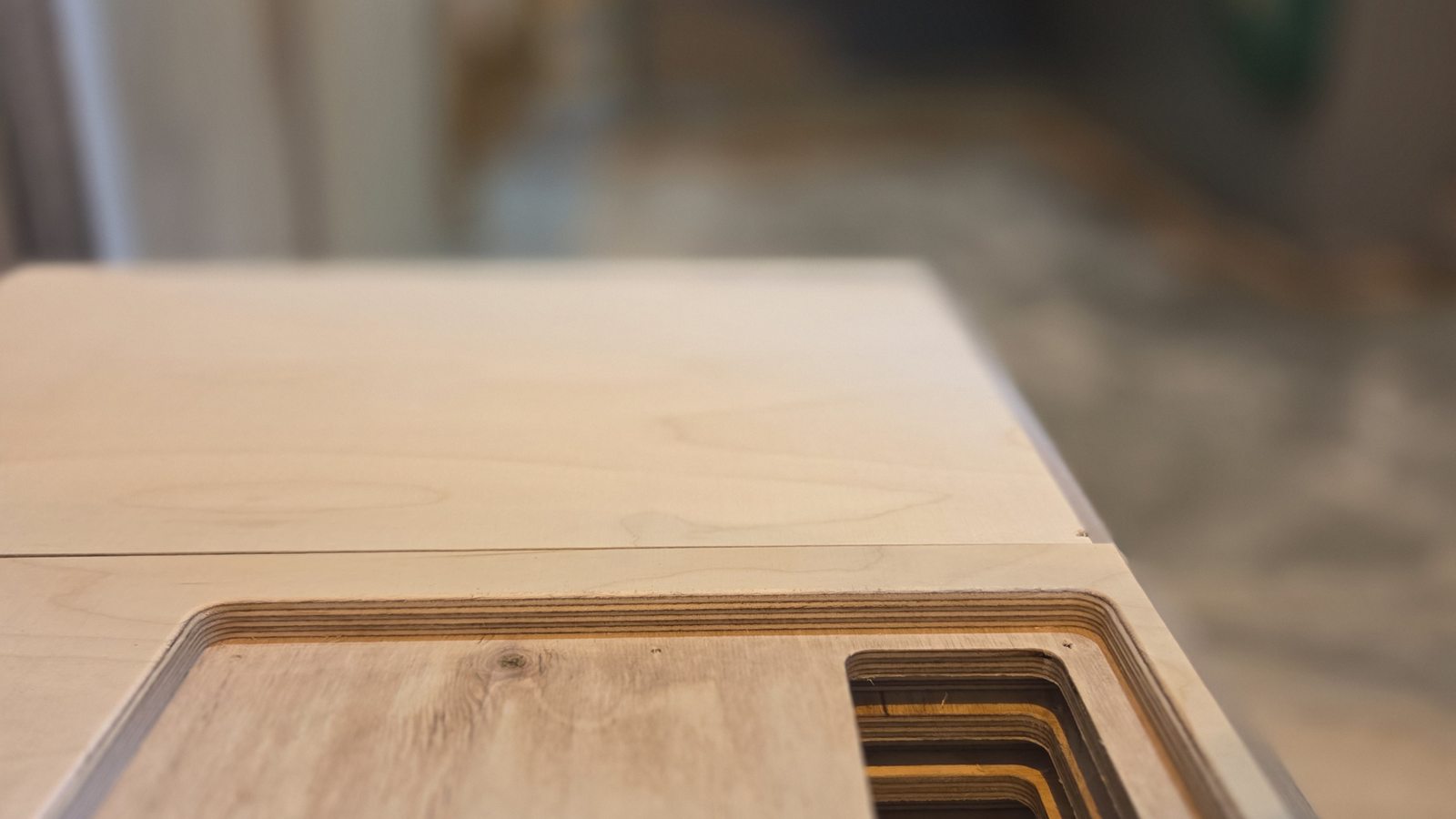
The difference between good enough and right is invisible in a photograph. It is not invisible in a listening test.
What we owe the work
I have been doing this for thirty-five years and I still believe the same thing I believed at the start. The job of a manufacturer is to deliver, every single time, what the design said the product would be. Not most of the time. Not within an acceptable tolerance band. Every time.
That sounds like an impossible standard, and on any individual day it sometimes is. But it is the only standard worth aiming at. Because the moment you accept "good enough" as a working principle, you have started a slide that ends somewhere you do not want to be.
The difference between good enough and right is invisible in a photograph. It is not invisible in a listening test. And it is not invisible to the people who pay us to be the part of their supply chain they never have to worry about.