Twelve years. That is not the age of the company. The company is thirty-four. Twelve years is the average length of time the people on our shop floor have been with us.
I think that number deserves more attention than it usually gets when people talk about manufacturing.
It is the kind of statistic that sounds like an HR line for the back of an annual report. It is not. In a precision workshop, it is the single most important thing on the page.
What twelve years actually means
A new starter, on day one, can follow a process sheet. We will train them carefully, walk them through the steps, point at the inspection criteria and explain what good looks like. By the end of their first week, they will be able to work safely and produce something that looks broadly like the finished part.
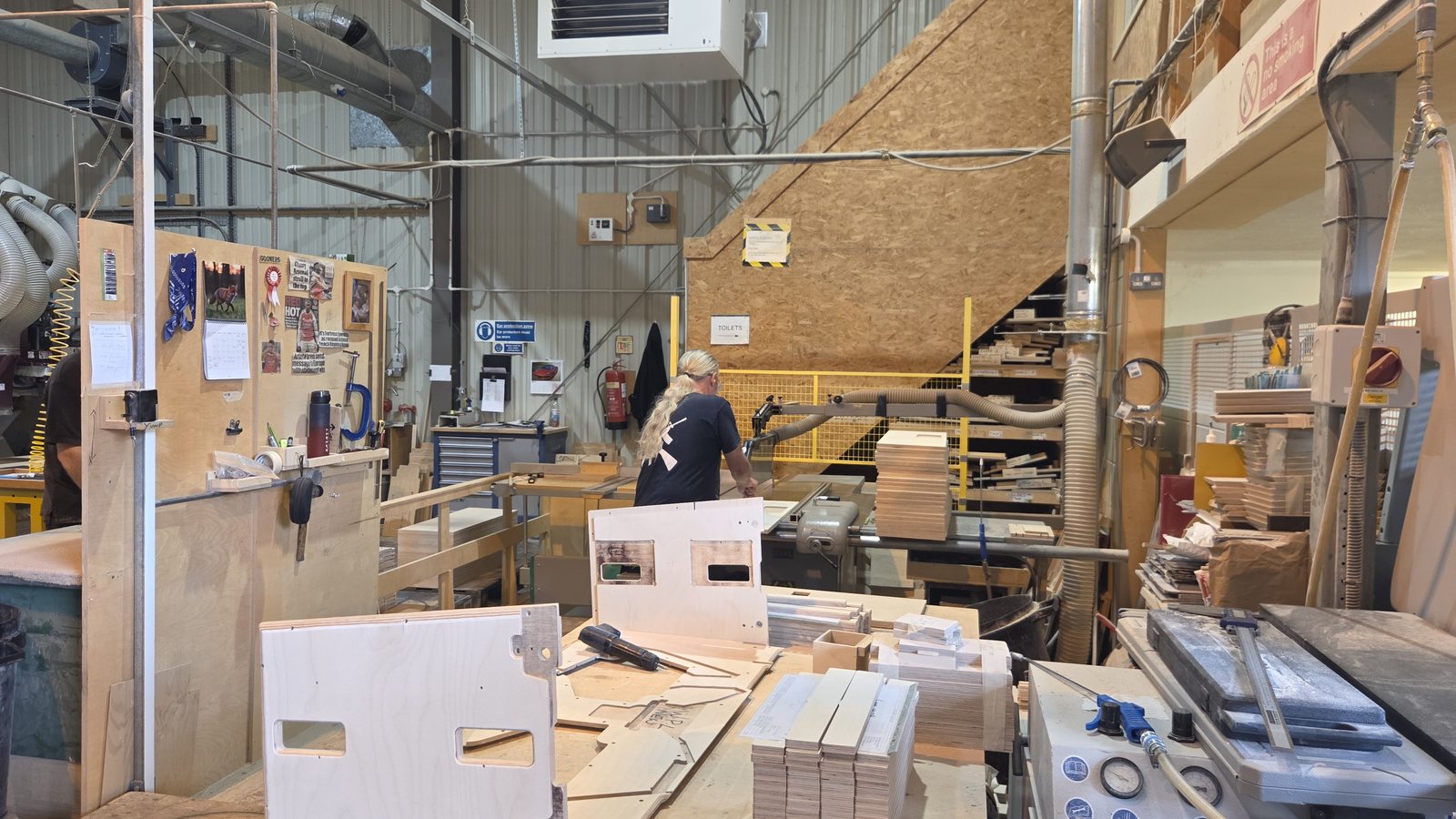
Someone who has been building cabinets for twelve years is doing something completely different. They are operating from a body of knowledge that is not, and could not be, written down. They know what a panel sounds like under the router when the tooling is starting to lose its edge. They know what the air in the spray shop feels like on a humid morning and what that means for the cure. They know which jig will hold which curve and which will not. They know, by feel, when a joint is dry enough to move on.
None of that lives in a document. All of it lives in a person. And the only way you accumulate it is time on the floor, building real cabinets, watching what happens.
Knowledge that compounds, or knowledge that walks out the door
This is the part the wider sector tends to miss. Skilled manufacturing knowledge is not a spreadsheet you maintain. It is a thing that compounds when people stay and evaporates when they leave.
If your average tenure is two years, every twenty-four months you are losing the institutional memory of one entire workshop and rebuilding it from scratch. Your training programme runs constantly. Your senior people spend half their time bringing new hires up to speed. Your error rate, no matter how good your process documentation, is higher than it should be, because the kind of mistakes a one-year joiner makes are not the same as the kind of mistakes someone with a decade behind them makes.
If your average tenure is twelve years, you have a workshop where people have built tens of thousands of cabinets together. They know how each other work. They can read each other's setups without asking. A junior who joins gets surrounded by seven or eight people who have already made every plausible mistake at least once and remember exactly what it cost to fix.
That is not a culture you can build in a procedure manual. It is the result of people being given the time and space to become genuinely good at something, and being treated well enough that they choose to stay.
The wider problem
I am not blind to what is happening in UK manufacturing more broadly. Skilled labour is genuinely hard to find. Apprenticeship pipelines have been thinning out for years. Workshops up and down the country are competing for the same small pool of trained people, and the result is constant churn and rising costs.
I do not have a clever answer to the national problem. What I can say is that our retention is not luck and it is not an accident of geography. It is the product of decisions made over many years about how the workshop is run, what kind of work people are asked to do, and how their craft is valued. People stay where they feel respected. They stay where the work is interesting. They stay where the standards are high enough that they are proud of what leaves the building.
Our average tenure is not an HR statistic. It is the reason our cabinets are what they are.
Why our clients should care
When a brand chooses Sarivale as a manufacturing partner, they are not really buying CNC capacity. They could buy CNC capacity from anyone with the budget for the machines. They are buying the accumulated judgement of a team that has been building speaker cabinets for one of the biggest names in pro audio for decades.
That judgement is what catches the issues a process sheet would miss. That judgement is what makes the difference on the cabinet you cannot quite measure but you can definitely hear. That judgement is the reason a client can place an order, walk away, and trust that the box that arrives at their dock will be exactly the box they expected.
Our average tenure is not an HR statistic. It is the reason our cabinets are what they are. And in an industry where most workshops are losing skilled people faster than they can replace them, it is, quietly, our biggest competitive advantage.