
The conversation about recyclable loudspeaker cabinets has gone from theoretical to commercial in the space of about two years. I did not expect that. Most of us in the workshop did not.
For most of my career, sustainability questions about pro audio enclosures lived somewhere between the polite end of a trade show panel and the back of a procurement document nobody ever read. They were considered, then quietly set aside while everyone got on with the actual specification.
That has changed. And it has changed quickly enough to be worth talking about, because it is starting to alter how cabinets are designed.
Why now
The proximate cause is regulatory. EU sustainability targets, particularly around the circular economy, have moved from aspirational language to procurement criteria. Public bodies, cultural institutions and large venues across Europe are increasingly required to factor end-of-life disposal into the products they buy. That includes the loudspeakers in their auditoriums.
The slower cause is generational. A new wave of facilities managers and technical directors at venues, especially in continental Europe, are coming into their roles with sustainability as a default expectation rather than an optional extra. They are reading the spec sheet from the back, looking at what happens to the product in twenty years, and then scrolling up to the acoustic performance.
The combined effect is real demand from the buyer side for cabinets that can be taken apart, separated, and recycled at end of life. Two years ago that was a question I was rarely asked. Now I am being asked it on briefs.
What "recyclable" actually means in this context
This is the part of the conversation where things get more complicated than the marketing tends to suggest.
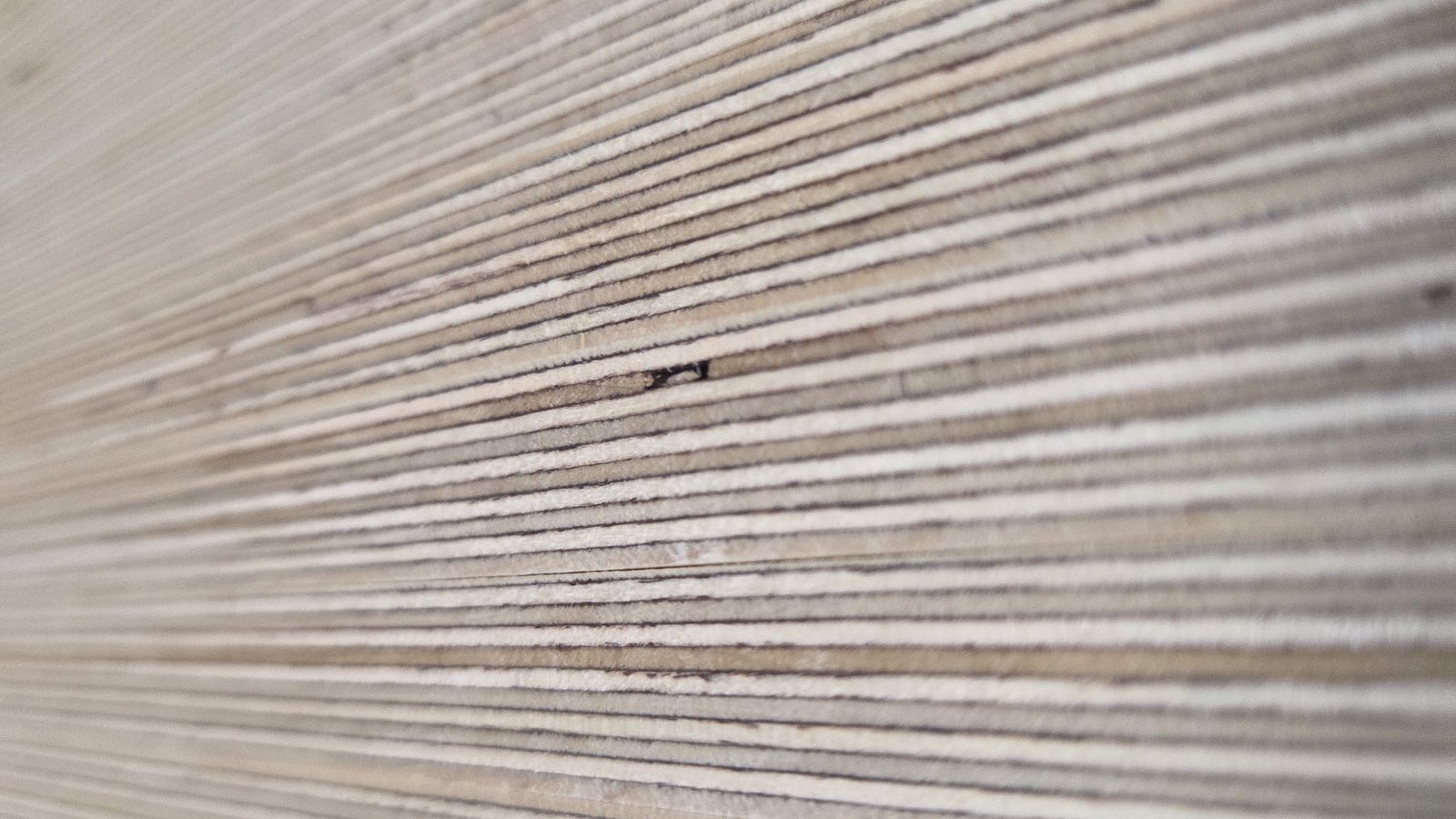
Baltic Birch is, in principle, a natural material. It is wood, it is bonded with adhesives that vary by grade, and it can be processed at the end of its life by routes that are well understood. So far, so straightforward.
The complication starts with everything else that lives on a finished cabinet. The coatings used on the outside of a touring enclosure are formulated to survive years of being thrown in and out of trucks, rained on, lifted by rigging, and abused by road crews. Many of those coatings are not easy to recycle. Some of them effectively contaminate the wood beneath them once applied. Some adhesives used in bracing and panel joints are recyclable. Others are not. The bracing inserts, the rigging hardware, the gaskets that maintain the airtight seal, all of those are separate material streams that need to be considered on their own terms.
A cabinet that is described as recyclable is, in practice, a cabinet that has been designed with end-of-life disassembly in mind. Fasteners chosen so the panels can be taken apart. Coatings selected from the more recyclable end of the available range. Bonded joints minimised in favour of mechanical ones where the acoustic performance allows. None of that is particularly difficult to do, but it has to be a design decision made early, not a label applied at the end.
The trade-offs are real
I want to be honest about something. The most acoustically inert finishes, the ones that are best at not colouring the sound coming out of the cabinet, are not always the most recyclable. The most durable coatings, the ones that survive ten years on the road, are not always the most recyclable either.
The specification has to balance acoustic performance, mechanical durability, and end-of-life disposal. You cannot maximise all three at once. A cabinet that is built to be torn down for recycling at the end of its life is, in some ways, a slightly different object from a cabinet that is built to last twenty years on the road. The materials science is moving fast, and the gap is closing, but it has not closed yet.
The right answer is going to depend on the brief. A festival rental fleet that gets turned over every five years has different priorities from a permanent installation in a heritage theatre that nobody is going to touch for the next thirty.
Sustainability in cabinet manufacturing is not a marketing line. It is a series of design decisions made today about what happens to the product in twenty years.
Where this is showing up
The most concrete example I can point to is the wave of heritage theatre renovations happening across Europe right now. Older venues being brought up to modern standards are increasingly writing recyclability and end-of-life criteria directly into their tenders. The cultural sector, particularly in countries with strong public funding, is leading on this, and I expect commercial venues will follow inside the next few years.
What that means for a manufacturer in our position is straightforward. The questions we are being asked at the design stage are different from the questions we were being asked five years ago. We need to know which coatings have a recyclable equivalent, which adhesives separate cleanly, and how a panel goes back into the waste stream once it has reached the end of its working life. None of that was on the brief twenty years ago. All of it is on the brief now.
Sustainability in cabinet manufacturing is not a marketing line. It is a series of design decisions made today about what happens to the product in twenty years. The manufacturers who take that seriously now are going to find the next decade much easier than the ones who treat it as a label.